
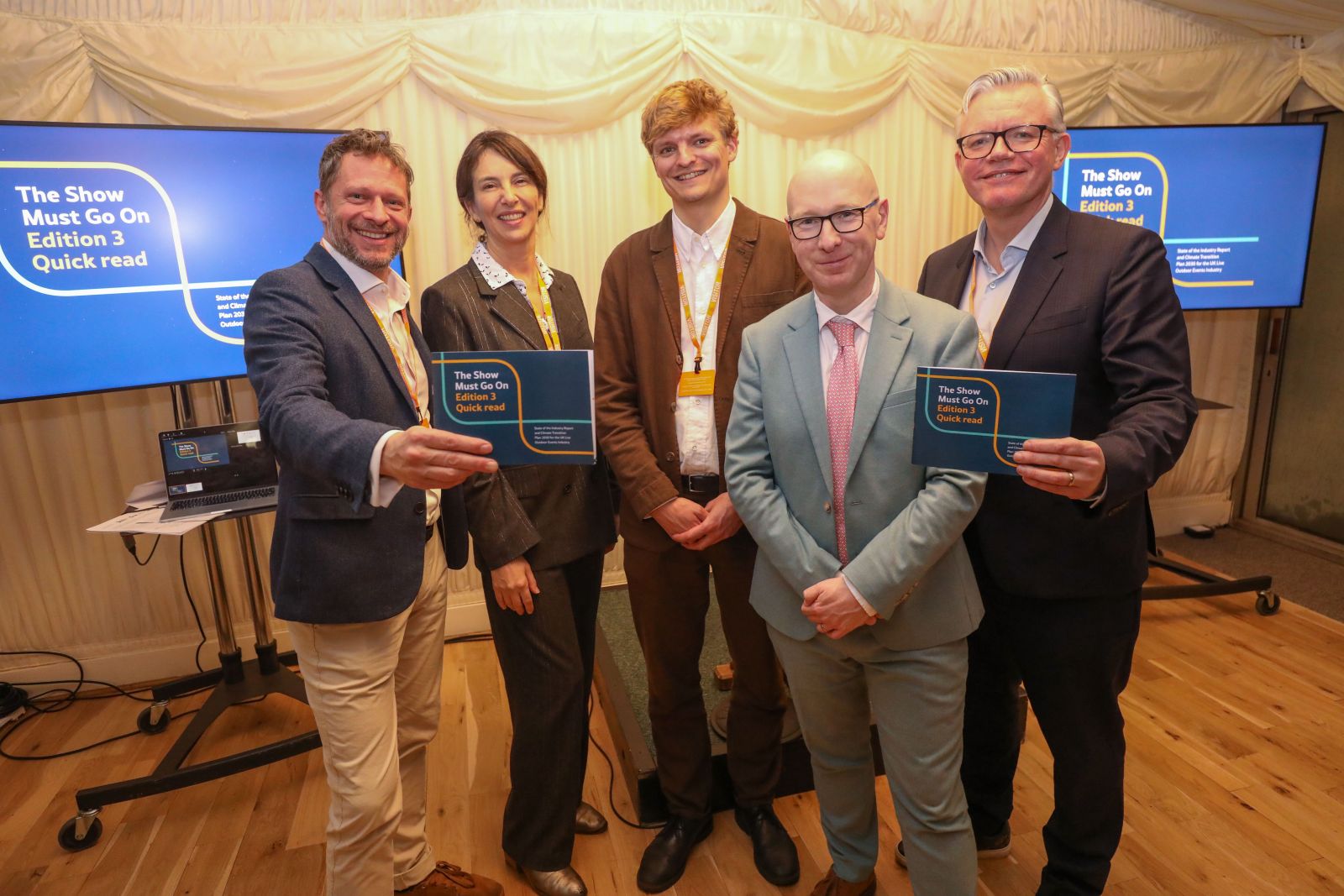
 The Show Must Go On report, launched in the House of Commons on the 11th of February, is a state-of-the industry report and climate transition plan for the UK Outdoor Event Industry, following unprecedented industry-wide collaboration, of which The Showman's Show was a Headline Sponsor.
Vision for Sustainable Events and Julie’s Bicycle published the third edition of the Show Must Go On (SMGO) report, which presents current practices and impacts, coupled with impact benchmarks and a Climate Transition Plan 2030 for the Live Outdoor Events Sector.
Download the report: https://bit.ly/VisionSMGO3
Chris Johnson, Vision for Sustainable Events Forum Chair, says:
“Organisations and sustainability experts from across the sector, including A Greener Future, Hope Solutions, Festival Republic, the Association of Independent Festivals and many others, have come together with the support of LIVE Green to create the most comprehensive impact report ever achieved, and a blueprint for collaboration on climate action to 2030.”
The Show Must Go On Report, funded by Arts Council England, EarthPercent, Event Industry Forum, and contributions by events promoters and suppliers, creates an ambitious and united vision for outdoor event climate action. It presents a blueprint to lower emissions, with climate action checklists for event organisers, and identifies how festivals can reduce typical footprints by 37%. Subject chapters provide clear actions for event organisers, supply chain, and sector organisations, as well as specific requests of government policy to overcome systemic barriers to achieve 50% emissions reductions.
The key Government asks from the industry include the national adoption of the Green Events Code of Practice (GECoP), accelerating the installation of grid connections in public outdoor event sites, adopting a consistent approach to bin signage and symbols, and removing barriers to public transport for audiences.
Generating £1.7 billion in annual revenue, the UK Live Outdoor Events Industry makes up a significant part of the UK’s £6.7 billion music industry.
Melvin Benn, Managing Director, Festival Republic, says:
"As event promoters and organisers, we are uniquely placed to influence positive change. Our industry brings millions of people together every year, and with that comes both a responsibility and an opportunity. The road ahead won’t be without challenges, but as promoters, we’re no strangers to those. This report is not just a snapshot of where we are, it’s a call to action. The show must go on, but it must go on sustainably.”